- How to ensure the quality of decoration with waterproof backing board
- Qingyu waterproof backing board is exported to the Middle East: technological empowerment and cultural adaptation drive a new paradigm of Chinese building materials overseas
- True crystal plate: the "new star" in the material world appears
- Qingyu HD-XPS: The "pressure-resistant and energy-saving double shield" of the cold storage floor solves the problem of low temperature and heavy load
- Going one step further than "better insulation": antibacterial real crystal panels, redefining energy saving and health
- The first step in building a self-built house is to choose Herring 10cm antibacterial real crystal board for base layer insulation, moisture proof and antibacterial
E-mail:greenfishcn@163.com
Phone:13370076925
TEL:0086-400-167-9158
Address:702, No. 285 Rongxing Road, Shanghai, China
Best Screed For Underfloor Heating: Which is Best for You?
The best screed for underfloor heating can determine the quality and performance of the system heating. Check out which screed for underfloor heating is right for you and your home.
Screed is an essential item to use when installing underfloor heating to ensure that it performs efficiently. However, there are numerous screed products on the market that many homeowners and DIYers may be unsure of which one to use. In this article, you will learn about the best screed for underfloor heating so that you can delineate the good from the great, the dry from the liquid, how self levellers work, and more!
Wet underfloor heating circulates heated water through durable pipes laid beneath the floor, ensuring an even distribution of warmth suitable for larger areas.
On the other hand, electric UFH systems use cables to generate heat, more suited to smaller spaces like bathrooms due to their lesser efficiency.
Choosing the right system depends on your space and heating requirements, and can affect how you want your underfloor heating to perform efficiently.
Preparing the Subfloor
The first step in installing an underfloor heating system involves preparing the subfloor, which may be a concrete slab or beam and block construction.
Essential layers such as a waterproof membrane and thermal insulation boards (like polystyrene or mineral wool) are laid down to optimise heat retention. A vapour barrier may also be added to protect against moisture. Following this, UFH pipes or cables are securely attached using clips, setting the stage for the screed to be applied.
Selecting the Best Screed for Underfloor Heating
best screed for underfloor heating selecting
For an even heat distribution, the thickness of the underfloor heating screed is crucial to determine the performance of the heating system.
Traditional sand and cement screeds should ideally be 65-75mm thick to cover the heating elements properly. However, when using advanced screeds with fibrous additives, which improves strength and durability, a minimum thickness of 50mm can suffice.
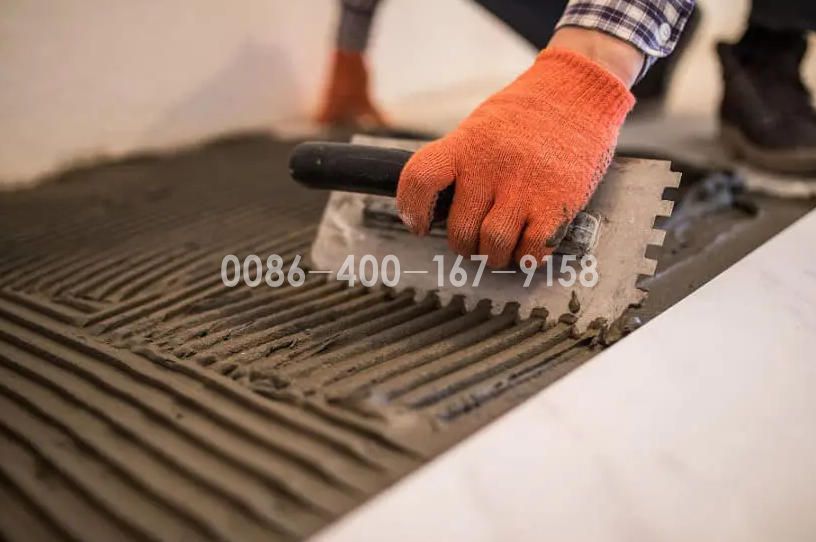
Traditional Dry Screeds
Dry screeds are a typically modern and conventional choice, particularly suited for smaller or residential spaces.
This type of underfloor heating screed is crafted by blending cement and sand in ratios ranging from 1:3 to 1:5, with water and fibre additives mixed in to aid durability and prevent cracking. To accommodate modern construction timelines, various additives might be incorporated to accelerate the drying process.
Proper mixing and compaction are crucial to avoid potential damage and ensure longevity. The addition of fibres and other additives can enhance the screed’s properties, including reducing the risk of cracking and shortening drying times. This type of screed is manually levelled using a straight edge, known as a screed bar, and can be finished smoothly using a plastic float and trowel.
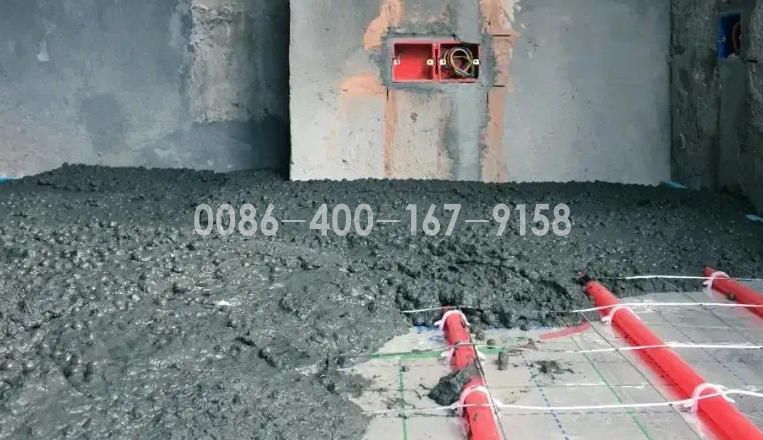
Self-Levelling Screeds
In contrast to dry screeds, self-levelling screeds, often referred to as liquid screeds or flowing screeds, offer a more advanced solution for larger spaces, such as industrial or commercial environments.
This type of screed consists of calcium sulphate, sand, water, and specific chemicals, creating a mixture that can be poured or pumped directly onto the floor area. It naturally spreads to create a level surface without manual intervention, simplifying installation and reducing labour costs.
Benefits of Liquid Flowing Anhydrite Screed
When it comes to selecting the best screed for underfloor heating, liquid anhydrite screed stands out due to its superior thermal conductivity.
Quicker drying: This type of screed not only facilitates a quicker room warm-up but also reduces energy consumption, thus lowering operating costs. Its fluid nature allows for a quick application over large areas, making it an ideal choice for both new builds and renovations.